
Godzilla: Destroy All Monsters Melee Remastered Tier List
A launch-window tier list for all 12 monsters, split by easy wins, high-level ceiling, and local multiplayer chaos. Godzilla, Ghidorah, and Kiryu compared.
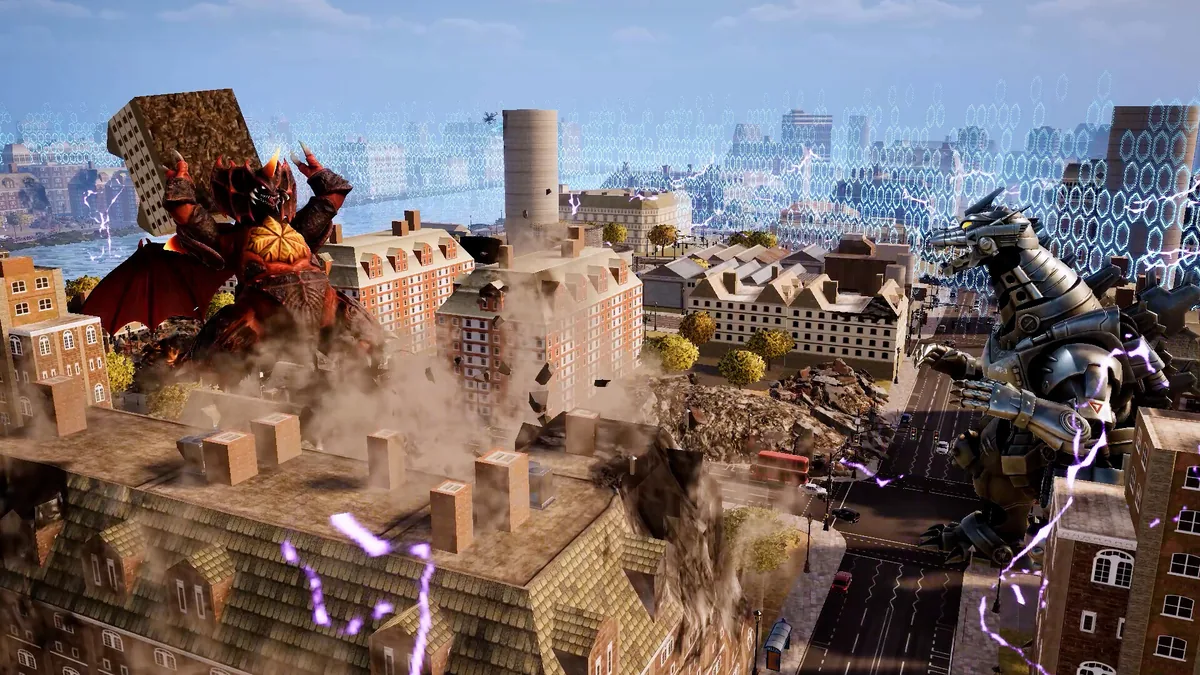
This tier list is a launch-window read, not a final balance verdict. The remaster released on November 3, 2026, and the online meta has not had time to settle. The rankings below weigh four things: neutral tools, defense and recovery, ease of use, and how much the character benefits from execution. A monster that wins immediately with simple tools can still fall once players learn the matchup.
The short version: Godzilla and King Ghidorah are the most forgiving, Kiryu and Destoroyah have the highest ceilings, and no one is unplayable. The gap between tiers is smaller than the gap between a player who blocks and one who does not.
The tier list
| Tier | Monsters | What the tier means |
|---|---|---|
| S | Godzilla, King Ghidorah | Strong tools with low execution cost; good in almost any matchup |
| A | Mechagodzilla, Kiryu, Godzilla 2000 | Strong with a clear plan; Kiryu needs more practice |
| B | Destoroyah, Orga, Megalon, Rodan | Viable with defined strengths and exploitable weaknesses |
| C | Gigan, Anguirus, Mecha-King Ghidorah | Specialist picks; require matchup knowledge or team support |
The ordering inside a tier is not strict. A B-tier monster can beat an S-tier monster if the player understands the matchup. This is a 3D arena fighter, not a spreadsheet.
S tier: Godzilla and King Ghidorah
Godzilla is the safest pick in the game. He has a projectile, a reliable close-range string, enough weight to survive a bad exchange, and a Rage Mode that does not require a complicated setup. His weakness is speed: faster characters can run circles around him if he commits to a long animation. At launch, that weakness is easy to cover because most players are still learning their own move sets.
King Ghidorah is the zoning king. His three heads give him wide normals and long-range gravity beams, and his size makes some opponents whiff attacks that would hit a smaller fighter. He is slow, and he is easy to hit with projectiles if he stands still. The counterplay is to close the distance, not to out-zone him. At low levels, most players do not close the distance well.
Both monsters are in S tier because they are strong and easy. A tier list that only measures the theoretical ceiling would put Kiryu higher. This list measures what a new player can actually do on launch day.
Pick Godzilla. Learn the block timing, the beam punish, and one reliable close-range string. You do not need a 20-hit combo to win at launch. You need to stop walking into Rage attacks.
A tier: Mechagodzilla, Kiryu, Godzilla 2000
Mechagodzilla is the most straightforward zoner after Ghidorah. He has armor on some attacks, a beam, and missiles that punish jumps. His close-range game is weaker than Godzilla's, so he wants to keep the opponent at mid-range. He is A tier rather than S because a fast opponent who gets inside can make his slow normals feel clunky.
Kiryu has the highest ceiling in the game. The freeze tool, the maser, and the heavyweight normals give him answers at multiple ranges, but the answers require setup. A good Kiryu player can control a match; a new Kiryu player will spend a lot of time whiffing. The Kiryu guide explains the routes.
Godzilla 2000 is the aggressive alternative to the default Godzilla. He moves faster and pressures earlier, but he is less forgiving when he guesses wrong. He is a good pick for players who already understand the neutral game and want a more proactive style.
B tier: Destoroyah, Orga, Megalon, Rodan
Destoroyah hits hard and closes space well, but his best tools require commitment. He is the kind of character who looks broken when he is ahead and frustrating when he is behind. The Destoroyah guide covers the risk-reward.
Orga is a stable brawler with a shoulder cannon and good grab range. He does not excel at any one range, which is why he is B tier, but he has no catastrophic weakness. He is a good second character for players who want a change of pace.
Megalon is the grappler. His drill gives him a long-range poke, and his grabs punish blocking. He struggles against zoners who never let him get close. In local play, where players are more willing to press buttons, he is much better than his online ranking suggests.
Rodan is the aerial specialist. His movement is his defense, and his heat beam covers his approach. He is B tier because the aerial routes require practice and because a patient zoner can wait him out. The Rodan guide has the movement routes.
C tier: Gigan, Anguirus, Mecha-King Ghidorah
Gigan is fast and has mix-up tools, but his health pool is small and his best pressure requires reads. He is not bad; he is demanding. A Gigan player who understands the opponent's habits can run circles around a slower character. A Gigan player who autopilots will lose.
Anguirus is the low-profile counter fighter. His short stature makes some high attacks whiff, and his spike tools punish predictable approaches. He struggles against zoners and against characters with wide horizontal normals. He is a specialist pick, not a first purchase.
Mecha-King Ghidorah has the trapping tools to control space, but he is less forgiving than King Ghidorah. The cables and beams require the opponent to be in the right place. He is C tier at launch because the setup is harder than the payoff, not because the character is weak.
A character's rank changes depending on the opponent. Anguirus can feel terrible against King Ghidorah and fine against a grappler. Mecha-King Ghidorah can lock down a slow brawler and struggle against a fast character. Use the tier list as a starting point, then learn the specific matchups.
How this list was built
The rankings are based on the move sets described by the official roster reveal, the Steam feature list, and the 2002 game's known archetypes. The remaster preserves the original's core mechanics while adding quality-of-life changes and an online mode. The characters' identities are therefore comparable to the 2002 versions, even though the balance numbers may differ.
I have not assigned numerical stat values because Atari has not published them. The "difficulty" and "tier" labels are editorial judgments. If the launch build changes a character's frame data or damage, the list will be revised.
The list also assumes a one-on-one versus context. In four-player local play, different characters rise. Area-of-effect attacks, wide normals, and projectiles become more valuable when there are more targets. Godzilla and King Ghidorah remain strong, but Megalon and Mechagodzilla move up because their tools hit multiple opponents.
Best monster for each player type
- First fighting game: Godzilla. Simple, durable, projectile.
- Zoner: King Ghidorah, then Mechagodzilla.
- Rushdown: Godzilla 2000, then Gigan.
- Grappler: Megalon.
- Technical: Kiryu.
- Aerial: Rodan.
- Counter fighter: Anguirus.
- Trapper: Mecha-King Ghidorah.
- High damage: Destoroyah.
- Stable secondary: Orga.
If you only buy one monster beyond the starter, buy the one that covers your main's worst matchup. The unlock guide explains how to prioritize purchases.
Does the tier list apply to local play?
Partly. Local play rewards different skills: reading a friend's habits, controlling space around the camera, and using the environment. Characters with big, forgiving hitboxes (Godzilla, Ghidorah, Mechagodzilla) are easier to use when the screen is chaotic. Technical characters (Kiryu, Gigan) are harder because the camera and the extra players make precise spacing more difficult.
If your main mode is local multiplayer, treat the tier list as a rough guide and prioritize characters that are fun to play with friends. The multiplayer guide covers the local setup.
Will the list change after launch?
Yes. The first balance patch, the online meta, and the discovery of new tech can move characters by a tier or more. Launch-week lists are most useful for players who want a starting point, not for players who want a permanent ranking. Check back after the first patch for an updated list.
Official source: Godzilla: Destroy All Monsters Melee Remastered Trailer Reveals Full 12-Kaiju Roster
For the next read, compare the tier list and the unlock route.
Sources and verification
- The official roster article describes the 12 monsters and their distinct move sets.
- Steam confirms the eight locations, local co-op, online multiplayer, and Rage Mode.
- Wikizilla tracks the roster changes from the 2002 release.
- TOHO Kingdom's original move list provides historical context for the 2002 characters' archetypes.
This is an editorial tier list. It is not endorsed by Atari, Pipeworks, or Toho, and it should not be treated as a guarantee of competitive viability.
More Godzilla: Destroy All Monsters Melee Remastered Guides
How to play Gigan in the remaster: buzzsaw pressure, chest laser zoning, movement mix-ups, and the defense you need to survive his small health pool.
How to play Godzilla 2000 in the remaster: the faster Godzilla's pressure game, spiral breath punishes, Rage timing, and the matchups where speed fails.
How to play Godzilla in the remaster: the neutral game, atomic breath timing, Rage Mode usage, and the matchups that punish careless beam spam.
How to play King Ghidorah in the remaster: using three heads and gravity beams to control space, when to stomp, and how to survive when a brawler gets inside.
How to play Kiryu in the remaster: the freeze tool, maser zoning, heavyweight normals, and the setup routes that make him the highest-ceiling monster.
How to play Mecha-King Ghidorah in the remaster: using cable traps and gravity beams to control space, and why the setup character is harder than King Ghidorah.
How to play the Showa Mechagodzilla in the remaster: armor trades, missile pressure, beam zoning, and the close-range weakness that keeps him honest.
How to play Megalon in the remaster: using the drill to close space, punishing blocks with grabs, and turning a corner into a win condition.