
Godzilla Melee Remastered Maps and Arenas
Eight locations with day and night variants, from destructible cities to Monster Island and the alien Mothership, and how each arena changes a fight.
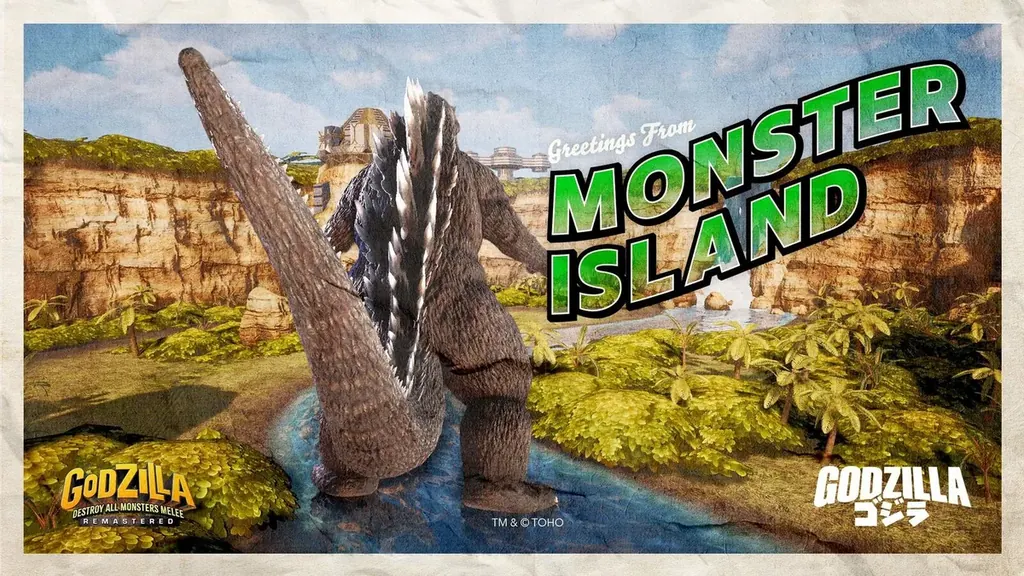
The remaster ships with eight locations, and each one has a day and a night variant. That is sixteen visual setups from eight underlying arenas. The official material names three categories: recreated real-world cities, Monster Island, and an alien Mothership. The 2002 game had eight venues, and the remaster's count matches, but Atari has not published a one-to-one list of every remaster stage.
That distinction matters. If you see a wiki page listing Tokyo, Osaka, London, Los Angeles, San Francisco, Seattle, Monster Island, and the Vortaak Mothership, that is the 2002 lineup. The remaster may use the same eight, a subset, or a new mix. The confirmed facts are the count, the day/night variants, and the three location types.
The eight locations
| Location type | Confirmed | What it does to a fight |
|---|---|---|
| Real-world city | Yes, category confirmed | Tight streets, destructible buildings, vertical cover |
| Monster Island | Yes, named | Open terrain, fewer corners, room for zoners |
| Alien Mothership | Yes, named | Interior spaces, hazards, tighter camera angles |
| Additional city venues | Count confirmed, names not fully published | Urban arenas with their own landmarks and destructibles |
The original game's city list is the best reference for what the remaster is likely to include, but treat it as historical context rather than a confirmed remaster list. The Wikizilla remaster page tracks the stage details as they are discovered.
Day and night variants
Every location has a day and a night version. The layout does not change, but the lighting does. That has a real gameplay effect:
- Night stages make projectiles easier to see because beams and energy attacks glow against a dark background. They also hide some environmental details, which can make a destructible object harder to spot.
- Day stages make the whole arena readable. Buildings, landmarks, and the arena boundary are clearer. The trade-off is that a projectile can blend into a bright sky or a sunlit building.
- Split-screen amplifies the lighting difference. A dark stage in four-player split-screen can be hard to read on a small screen. If your group is learning the game, pick day variants.
The day/night toggle is a visual variant, not a separate stage. You do not need to unlock both versions separately as far as Atari has said. The unlock system covers locations, so a locked location may lock both variants until you buy it.
The brighter lighting makes it easier to learn the arena layout and to see incoming attacks. Switch to night once you know where the destructible objects are.
How arenas change the neutral game
The remaster's arenas are not flat. Buildings and landmarks can be used as weapons or cover, and the official material highlights destructible environments. That creates three arena roles:
Cover. A building between you and a zoner blocks a projectile. You can use cover to close distance without walking through the beam. The trade-off is that cover also blocks your approach; a patient zoner can wait for you to come around.
Weapons. Some environmental objects can be picked up or thrown. A thrown object is a slow, high-damage option that can punish an opponent who is holding block. The exact controls depend on the object and the character.
Hazards. The Mothership and some city stages may have environmental hazards. These are not evenly distributed, and they can decide a match if a player ignores them. Learn the hazard timing before you play a ranked match on an unfamiliar stage.
Arena knowledge is part of the skill gap. A player who knows where the destructible objects are will beat a player who treats every stage as a flat circle.
Arena archetypes and character picks
Open arenas (Monster Island type). Zoners thrive. King Ghidorah and Mechagodzilla can keep a brawler at range, and there is less cover to break line of sight. Fast characters can still close the distance, but they have to eat a projectile or sidestep it.
Urban arenas (city type). Brawlers and grapplers improve. Buildings create corners, and a corner is where a grappler wants you. Zoners have to reposition more often, and projectiles can be blocked by geometry. Godzilla and Megalon benefit.
Interior arenas (Mothership type). The camera is tighter, and the walls limit long-range play. Rushdown characters and close-range specialists do better. A zoner who relies on max-range beams will struggle to find space.
If you are learning a new character, play it on an open stage first. The lack of cover makes the neutral game easier to understand. Once you know the range, move to the urban and interior stages.
The original eight venues
For context, the 2002 GameCube release used these eight venues:
- Tokyo
- Osaka
- London
- Los Angeles
- San Francisco
- Seattle
- Monster Island
- Vortaak Mothership
The remaster's official description says "recreated cities and familiar locations," which suggests the team is rebuilding recognizable venues rather than inventing a new world. The count of eight matches the original. The safest reading is that the remaster draws from this list, but the final stage select screen is the authority.
Do not treat the original list as a remaster confirmation. If a guide tells you a specific stage has a specific hazard, check the in-game stage before you rely on it.
The remaster lets you unlock monsters, locations, and gallery items in any order. Some stages may be locked at the start. If a stage is missing from the select screen, check the unlock shop. The unlock guide explains the currency system.
Stage strategy by matchup
Zoner vs. brawler. The zoner wants an open stage and a corner-free layout. The brawler wants a city with cover and a wall to trap the zoner. If you are the zoner, ban the tightest stage; if you are the brawler, pick it.
Grappler vs. rushdown. The grappler wants a small arena where the opponent cannot run. The rushdown character wants space to circle. The Mothership's interior favors the grappler; Monster Island favors the rushdown character.
Mirror match. In a mirror match, the stage matters less than the player's habits. Pick a stage you know. The day variant is easier to read.
Four-player local. Wide, open stages are better because the camera has more room. Tight interiors become chaotic in split-screen, which is fun but hard to learn from.
Are there stage hazards?
The official material mentions destructible environments and the ability to use buildings as weapons, but it does not publish a hazard list for every stage. The Mothership is the most likely candidate for environmental hazards because it is an alien interior, and the original game's Mothership stage had hazards. Treat that as an inference, not a confirmed detail.
If a stage has a hazard, learn its telegraph. A hazard that catches you once is a surprise; a hazard that catches you twice is a mistake.
Which stage should you learn first?
Pick Monster Island during the day. It is the most open layout, the lighting is clear, and the lack of urban cover makes it easy to see how projectiles travel. Once you can navigate that stage without losing the opponent, move to a city stage and learn to use cover.
The beginner guide has a first-session plan that includes one match on each arena type. The multiplayer guide explains how to set up a local match with the day/night variant you want.
Official source: Steam store page for Godzilla: Destroy All Monsters Melee Remastered
For the next read, compare the tier list and the unlock route.
Sources and verification
- Steam confirms eight locations, each with day and night variants, plus real-world cities, Monster Island, and the alien Mothership.
- The official Godzilla roster article describes recreated cities and familiar locations.
- Wikizilla tracks the remaster's stage details and the original venue list.
- Wikipedia's original game article lists the 2002 venues for comparison.
The eight-location count and the day/night variants are confirmed. The exact remaster stage names are not fully published, so this page distinguishes confirmed details from the 2002 lineup.
More Godzilla: Destroy All Monsters Melee Remastered Guides
How to play Destoroyah in the remaster: closing space, turning one opening into huge damage, and managing the commitment that makes him high-risk.
How to play Gigan in the remaster: buzzsaw pressure, chest laser zoning, movement mix-ups, and the defense you need to survive his small health pool.
How to play Godzilla 2000 in the remaster: the faster Godzilla's pressure game, spiral breath punishes, Rage timing, and the matchups where speed fails.
How to play Godzilla in the remaster: the neutral game, atomic breath timing, Rage Mode usage, and the matchups that punish careless beam spam.
How to play King Ghidorah in the remaster: using three heads and gravity beams to control space, when to stomp, and how to survive when a brawler gets inside.
How to play Kiryu in the remaster: the freeze tool, maser zoning, heavyweight normals, and the setup routes that make him the highest-ceiling monster.
How to play Mecha-King Ghidorah in the remaster: using cable traps and gravity beams to control space, and why the setup character is harder than King Ghidorah.
How to play the Showa Mechagodzilla in the remaster: armor trades, missile pressure, beam zoning, and the close-range weakness that keeps him honest.