
Godzilla: Destroy All Monsters Melee Remastered Walkthrough
How the 12 single-player campaigns work, the fastest route through them, and the fights that teach you the most about each monster's toolkit.
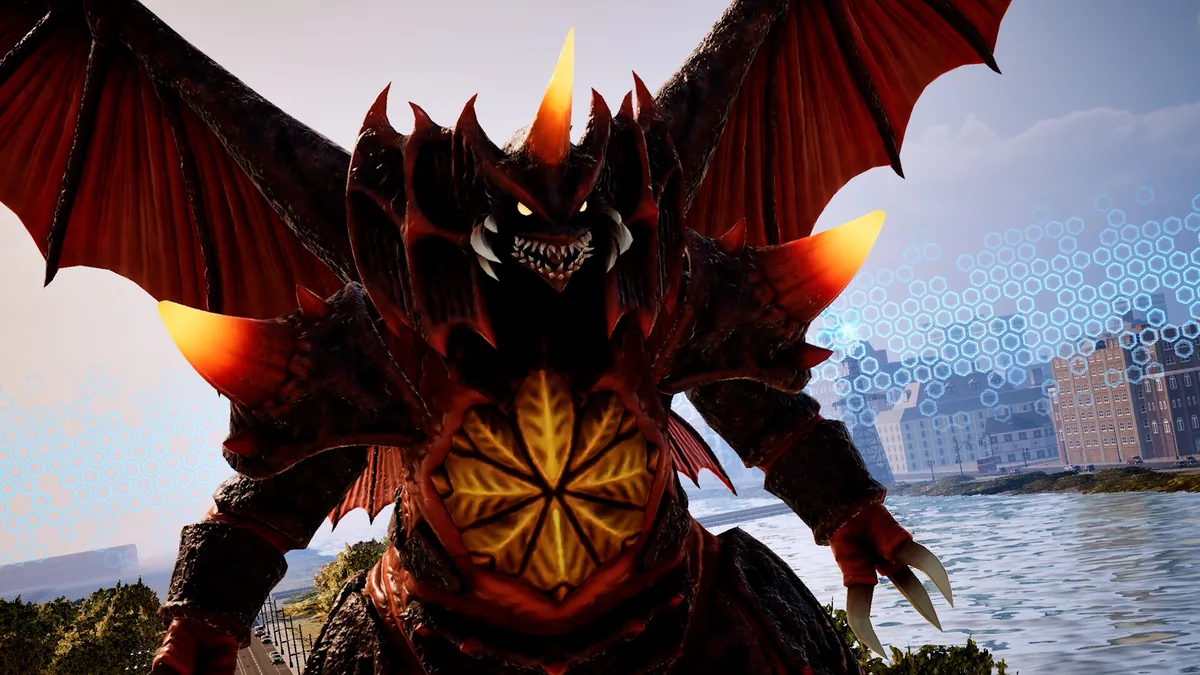
The remaster's single-player structure is one campaign per kaiju, not one shared story with a fixed character order. That means there is no single walkthrough that covers every route. There are 12 routes, and each one is a chance to learn a different move set.
This page explains how the campaigns work, the order that makes sense for a new player, and the parts of each route that are worth slowing down for. It avoids inventing stage names or boss identities that Atari has not published.
How the campaigns work
Each of the 12 monsters has a dedicated campaign. The official announcement describes a single-player campaign for each kaiju, and the Steam page lists a single-player mode alongside the multiplayer features. The campaigns are structured as sequences of fights, with the character's own move set available from the start.
The campaigns are not the only progression path. The remaster's unlock system lets you buy monsters, locations, and gallery items with in-game currency in any order. You can finish one campaign, buy a new monster, and never touch the other 11 campaigns. The campaigns are a tutorial and a currency source, not a gate.
That is different from the 2002 game, where the campaign was the main unlock route. If you are coming from the original, expect a more flexible structure and a shorter mandatory grind.
The recommended order
For a new player, the best order is not "all 12 in roster order." It is:
- Godzilla. The all-rounder campaign teaches blocking, spacing, and Rage timing without demanding precise execution.
- King Ghidorah or Mechagodzilla. A zoner campaign teaches you to control space and punish approaches. Pick the one whose range feels more natural.
- A fast character. Godzilla 2000, Gigan, or Rodan. This teaches you to move, sidestep, and avoid standing in front of a projectile.
- A grappler. Megalon. This teaches you to punish blocking and to use the arena corners.
- A technical character. Kiryu or Destoroyah. These campaigns are harder because the tools require setup, but by now you know the neutral game.
- The rest. Finish the roster in whatever order you like.
This order front-loads the fundamentals. If you start with Kiryu, you will learn his tools in isolation and then struggle when a faster character closes the distance. If you start with Godzilla, you learn the system first.
The first campaign pays enough currency to make a second purchase, and it teaches you whether you actually like the character. Do not buy three monsters in the first hour and then wonder why none of them feel comfortable.
What each campaign teaches
| Monster | Campaign lesson | Watch out for |
|---|---|---|
| Godzilla | Neutral, blocking, beam timing | Overusing the beam at close range |
| Godzilla 2000 | Forward pressure, speed | Committing to long animations |
| Anguirus | Low-profile defense, counters | Zoners who stay out of range |
| Gigan | Movement, mix-ups | Small health pool |
| Megalon | Grabs, corner pressure | Getting zoned out |
| King Ghidorah | Space control, wide normals | Slow movement |
| Mecha-King Ghidorah | Traps, setup | Needing the opponent in the right place |
| Mechagodzilla | Armor, projectiles | Slow close-range normals |
| Kiryu | Technical routes, freeze setups | High execution cost |
| Rodan | Aerial movement, hit-and-run | Stamina and positioning |
| Destoroyah | High-damage confirms | Overcommitting |
| Orga | Stable brawling, grabs | Lacking a clear specialty |
The "watch out for" column is the thing the campaign will punish you for. If you finish a campaign and still make that mistake, you have learned the moves but not the matchup.
Campaign difficulty
The remaster has difficulty options. Atari has not published a detailed difficulty table, but the standard fighting-game logic applies: lower difficulty gives the CPU slower reactions and less aggressive pressure; higher difficulty gives it better punishes and more consistent blocking.
For a first campaign, play on the default or lower difficulty. The goal is to learn the controls and the character, not to prove you can beat a perfect CPU. Raise the difficulty once you can block a full string and punish a whiff consistently.
If you are playing for currency efficiency, test the payout at two difficulties. If higher difficulty pays more but takes twice as long, the lower difficulty may be faster per hour. The game does not publish a multiplier, so measure it yourself.
The fights that matter
Not every campaign fight is a lesson. Some are straightforward, and some are difficulty spikes. The ones worth slowing down for are:
Mirror matches. Fighting your own monster teaches you the character's weaknesses. If the CPU can hit you with a move you rely on, a human player will too.
Zoner vs. brawler. These fights teach you to close distance or to keep it. They are the core matchup lesson of the game.
Grappler fights. If you rely on blocking, a grappler will punish you. Learn to sidestep and to break grabs if the game allows it.
Four-player local. Not part of the campaign, but the best way to test what you learned. The camera chaos is a different skill from one-on-one.
The CPU does not taunt, rage-quit, or adapt like a human. Use the campaign to learn your character, then play online to learn the matchup. The multiplayer guide covers the online side.
How to approach a new campaign
When you start a new monster's campaign, do this:
- Open the move list and read the special moves. You do not need to memorize them, but you should know what exists.
- Play the first fight without using Rage. Learn the basic strings.
- In the second fight, use Rage once. See how long it lasts and what changes.
- In the third fight, practice one defensive option: block, sidestep, or grab.
- By the fourth fight, you should have a simple game plan: one approach, one punish, one escape.
That is enough to finish most campaigns. You do not need to master every move before the credits.
Campaign completion and unlocks
Finishing a campaign pays currency. The exact amount is not published, and it may depend on difficulty or performance. The currency can be spent on any monster, location, or gallery item, not just the one you finished.
If your goal is the full roster, the fastest route is to play the mode with the shortest matches and the least downtime. Campaigns have story framing; local versus against the CPU may be faster per match. Test both and see which feels less tedious.
The unlock guide has a four-phase purchase plan. The short version: buy one main, one counter, then the fun pick, then completion.
What about the story?
The 2002 game's story involved the Vortaak controlling monsters. The remaster's official material focuses on the roster and the modes, not on a new narrative. Do not expect a redesigned story campaign with cutscenes for every character. The campaigns are fight sequences with light framing, not a cinematic reboot.
That is fine. The appeal of the original was the monster combat, not the plot. The remaster keeps the campy tone and adds modern presentation.
Common walkthrough mistakes
Rushing the campaign to unlock everything. The currency system means you do not need to rush. Play the character you enjoy.
Ignoring the move list. The game does not teach every special move in the tutorial. Read the list; you may find a tool that solves a matchup you hate.
Playing only one character. The campaigns are designed to show you different tools. Try at least three before you decide on a main.
Skipping local play. The campaign teaches you the character; local play teaches you to adapt. A few local matches will improve your online game more than another campaign clear.
Assuming the CPU is a good training partner for online. The CPU does not play like a human. Use it to learn the controls, not to learn the meta.
Official source: Godzilla: Destroy All Monsters Melee Remastered Trailer Reveals Full 12-Kaiju Roster
For the next read, compare the tier list and the unlock route.
Sources and verification
- The official Godzilla roster article confirms a campaign for each kaiju.
- Steam lists the single-player mode and the unlock system.
- Wikizilla tracks the remaster's mode structure.
- Wikipedia's original game article provides the 2002 story and progression context.
Campaign length and difficulty payouts may vary by patch. The structure — one campaign per kaiju, currency-based unlocks — is confirmed by official material.
More Godzilla: Destroy All Monsters Melee Remastered Guides
How to play Destoroyah in the remaster: closing space, turning one opening into huge damage, and managing the commitment that makes him high-risk.
How to play Gigan in the remaster: buzzsaw pressure, chest laser zoning, movement mix-ups, and the defense you need to survive his small health pool.
How to play Godzilla 2000 in the remaster: the faster Godzilla's pressure game, spiral breath punishes, Rage timing, and the matchups where speed fails.
How to play Godzilla in the remaster: the neutral game, atomic breath timing, Rage Mode usage, and the matchups that punish careless beam spam.
How to play King Ghidorah in the remaster: using three heads and gravity beams to control space, when to stomp, and how to survive when a brawler gets inside.
How to play Kiryu in the remaster: the freeze tool, maser zoning, heavyweight normals, and the setup routes that make him the highest-ceiling monster.
How to play Mecha-King Ghidorah in the remaster: using cable traps and gravity beams to control space, and why the setup character is harder than King Ghidorah.
How to play the Showa Mechagodzilla in the remaster: armor trades, missile pressure, beam zoning, and the close-range weakness that keeps him honest.