
Godzilla Melee Remastered Rage Attack: How to Use It
How Rage Mode works in Godzilla Melee Remastered: the pickup, the activation window, the Rage Attack and fixes when rage is not working.
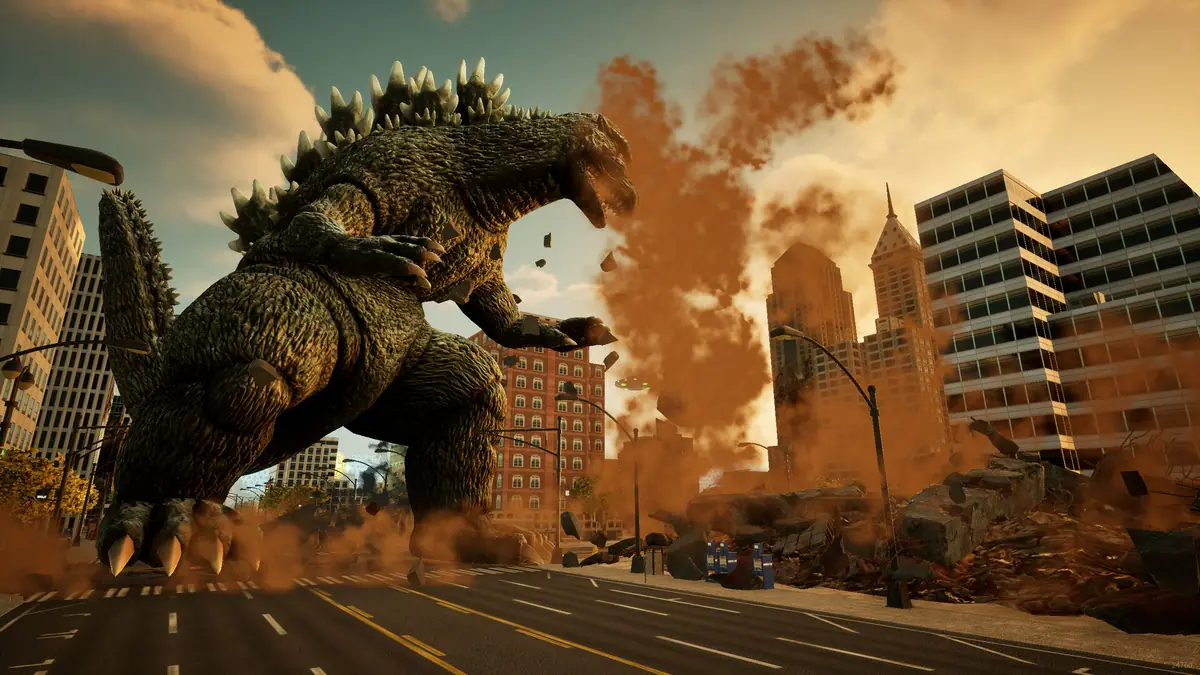
Rage Mode is a temporary powered-up state, not a meter you fill by dealing damage. You activate it, your attacks become more dangerous, and you have a limited window to land the Rage Attack before the state expires. Each monster has its own Rage Attack animation and hitbox, which is why the move can feel inconsistent when you first try it.
The system is easy to misread because the HUD has more than one bar. The yellow bar players often watch is an energy meter for ranged attacks and flight, not the Rage state. If you are waiting for that bar to fill and wondering why Rage never activates, you are looking at the wrong indicator.
Grab the Rage pickup, activate Rage with the Rage input shown in your move list, then land the Rage Attack before the state ends. The Rage Attack is a one-shot burst, not a repeatable combo ender. If the input does nothing, check the lobby rules and your controller binding.
What Rage Mode actually is
Rage is a state, not a resource you build. The game's control scheme lists Rage as a separate action alongside light, heavy, block, grab and ranged attacks. Activating it changes your damage and gives you access to the Rage Attack. It does not heal you, refill your energy bar or make you invincible.
The original 2002 game used a Rage power-up: you picked it up, entered Rage Mode, and could perform a devastating Rage Attack before the state wore off. The remaster keeps Rage Mode as a feature, and the in-game move list is the authority for the exact activation input on your platform. The controls guide explains the action set; the pause menu shows the binding for your chosen preset.
Three practical consequences follow:
- Do not save it for the perfect moment. Rage expires. A wasted activation is worse than an imperfect one.
- Do not treat it as a comeback button. It boosts offence; it does not repair a losing position.
- Do not expect the same Rage Attack on every monster. The animation, range and hitbox are part of the character's kit.
How to activate Rage Mode
- Find the Rage pickup. It spawns in the arena during a match. Pick it up to make the Rage state available.
- Confirm the Rage input. Open the pause menu or move list. Rage is a dedicated action, usually on a shoulder button, but the exact binding depends on your platform and preset.
- Activate it when you are in range. Rage does not close the distance for you. If you activate it across the arena, the opponent will back off and you will waste the duration.
- Pressure immediately. Use your fastest safe string or a projectile to cover the approach. The opponent knows the state is active and will play more defensively.
- Land the Rage Attack before the state ends. The Rage Attack is the payoff. If the state expires first, you lose the chance.
The pickup is the part players miss. If you have not picked one up, the Rage input will not start the state. That is not a bug; it is the design.
The Rage Attack, step by step
The Rage Attack is a single, high-commitment move. The exact input is shown in the move list; it is not a hidden combo. The general flow is:
- Enter Rage Mode.
- Confirm the opponent is grounded and within the move's effective range.
- Input the Rage Attack.
- Let the animation finish. Do not mash another attack during the startup.
- Follow up only if the hit connects and the opponent is still in range.
Two mistakes are common. The first is using the Rage Attack at maximum range, where the hitbox whiffs and the recovery leaves you exposed. The second is using it while the opponent is airborne or behind you. The move is designed to punish a grounded opponent who is already committed to a slow action, not to chase a jumping target.
The game does not publish frame data, so there is no official "best" time to use it. The practical rule is to use it after a blocked string or a knockdown, when the opponent's options are limited.
Which monsters benefit most
Rage is universal, but the payoff varies by character. The site's character guides describe the general pattern:
- Godzilla uses Rage to extend close-range pressure. His Rage Mode rewards patient play rather than a panic activation.
- Godzilla 2000 turns Rage into a close-range snowball. Light strings into grab become more threatening.
- Anguirus wants Rage in close range, where his grabs and spikes can punish a blocking opponent.
- Destoroyah wants Rage when the opponent is cornered or after a heavy hit.
- Gigan uses Rage to make his mix-ups more threatening, especially after a knockdown.
- King Ghidorah and Mechagodzilla can use Rage to make their zoning more punishing, but they still need to keep the opponent at range.
The Godzilla guide and the tier list go deeper on each character. The short version: activate Rage when you already have the advantage, not when you are trying to create one from neutral.
Rage not working: the checklist
If the Rage input does nothing, work through these in order:
| Symptom | Likely cause | Fix |
|---|---|---|
| No Rage state after pressing the button | You have not picked up the Rage pickup | Find the pickup in the arena |
| The input works in one mode but not another | The lobby or mode has Rage disabled | Check the match rules before starting |
| The meter disappears before you attack | The Rage window expired | Activate closer to the opponent and attack sooner |
| The Rage Attack whiffs | The opponent is airborne, behind you or out of range | Use it after a knockdown or blocked string |
| The button does nothing on PC | The controller preset does not map Rage | Check the pause menu and Steam Input binding |
| Rage activates but damage feels unchanged | You are hitting a blocking opponent or a boss with resistance | Use a grab or a different opener |
The first row is the most common. Players see a full energy bar and assume Rage is ready. It is not: energy and Rage are separate systems. The second most common is a mode rule. Some matches disable Rage for balance or for a specific ruleset, and the lobby settings are the authority.
If none of those apply, restart the match and test in the campaign. A one-off input drop can be a controller connection issue, especially on PC or in local split-screen.
Using Rage in local and online matches
Local split-screen. Rage is strongest in four-player chaos because the Rage Attack can catch a player who is distracted by another fight. Activate it when two opponents are close together, not when you are alone with a zoner.
Online. Latency makes the Rage Attack harder to land. Favour it after a confirmed knockdown rather than as a raw approach. If the connection is poor, use Rage for the damage boost and treat the Rage Attack as a bonus rather than the plan.
Campaign. The CPU is more predictable than a human, so Rage is a reliable way to close out a fight. Do not hoard it for the boss; use it on the first elite encounter and earn another pickup later.
Rage vs energy: do not confuse the bars
The HUD has an energy bar for ranged attacks, flight and other character-specific tools. Rage is a separate state with its own pickup and timer. If you are watching the yellow bar, you are watching the wrong resource.
That confusion is worth fixing early because it changes how you play neutral. Energy management is about when to spend a projectile; Rage management is about when to commit to a powered-up window. They are different decisions, and a player who treats them as one will either waste Rage or run out of energy at the worst moment.
FAQ
How do I activate Rage Mode? Pick up the Rage pickup, then press the Rage input shown in your move list. The exact button depends on your platform and preset.
What is the Rage Attack input? It is listed in the in-game move list for your monster. It is a dedicated action, not a hidden combo.
Why is Rage not working? The most common causes are not having picked up the Rage pickup, a lobby rule that disables Rage, or an expired Rage window. Check the pickup, the match rules and the timer.
Is the yellow bar the Rage meter? No. The yellow bar is the energy meter for ranged attacks and character-specific tools. Rage is a separate state triggered by a pickup.
Can I use the Rage Attack more than once per activation? The Rage Attack is a one-shot burst during the Rage state. The official material does not describe a repeatable Rage Attack loop, so plan for one committed use.
Does Rage heal you? No. Rage boosts offence and unlocks the Rage Attack. It does not restore health or make you invincible.
Does every monster have the same Rage Attack? No. Each monster has its own Rage Attack animation and hitbox. The character guides cover the practical use cases.
What to read next
- Controls and input guide for the action set and platform bindings.
- Godzilla guide for Rage timing on the default character.
- Tier list and matchups for which characters benefit most.
- Unlockables for the roster and gallery.
Sources
- Godzilla: Destroy All Monsters Melee Remastered on Steam — official feature list, including Rage Mode.
- PlayStation Blog fighter guide — official character context.
- Atari — publisher announcements and support.
More Godzilla: Destroy All Monsters Melee Remastered Guides
How to play Anguirus in the remaster: using his short stature, spike attacks, and counter tools to beat bigger monsters without getting zoned out.
How to play Destoroyah in the remaster: closing space, turning one opening into huge damage, and managing the commitment that makes him high-risk.
How to play Gigan in the remaster: buzzsaw pressure, chest laser zoning, movement mix-ups, and the defense you need to survive his small health pool.
How to play Godzilla 2000 in the remaster: the faster Godzilla's pressure game, spiral breath punishes, Rage timing, and the matchups where speed fails.
How to play King Ghidorah in the remaster: using three heads and gravity beams to control space, when to stomp, and how to survive when a brawler gets inside.
How to play Kiryu in the remaster: the freeze tool, maser zoning, heavyweight normals, and the setup routes that make him the highest-ceiling monster.
How to play Mecha-King Ghidorah in the remaster: using cable traps and gravity beams to control space, and why the setup character is harder than King Ghidorah.
How to play the Showa Mechagodzilla in the remaster: armor trades, missile pressure, beam zoning, and the close-range weakness that keeps him honest.