
Godzilla Melee Remastered Review: Worth $30?
IGN scored it 7/10 and Metacritic sits in the low 70s. A hands-on look at combat, multiplayer, content, and whether the $29.99 remaster is worth it.
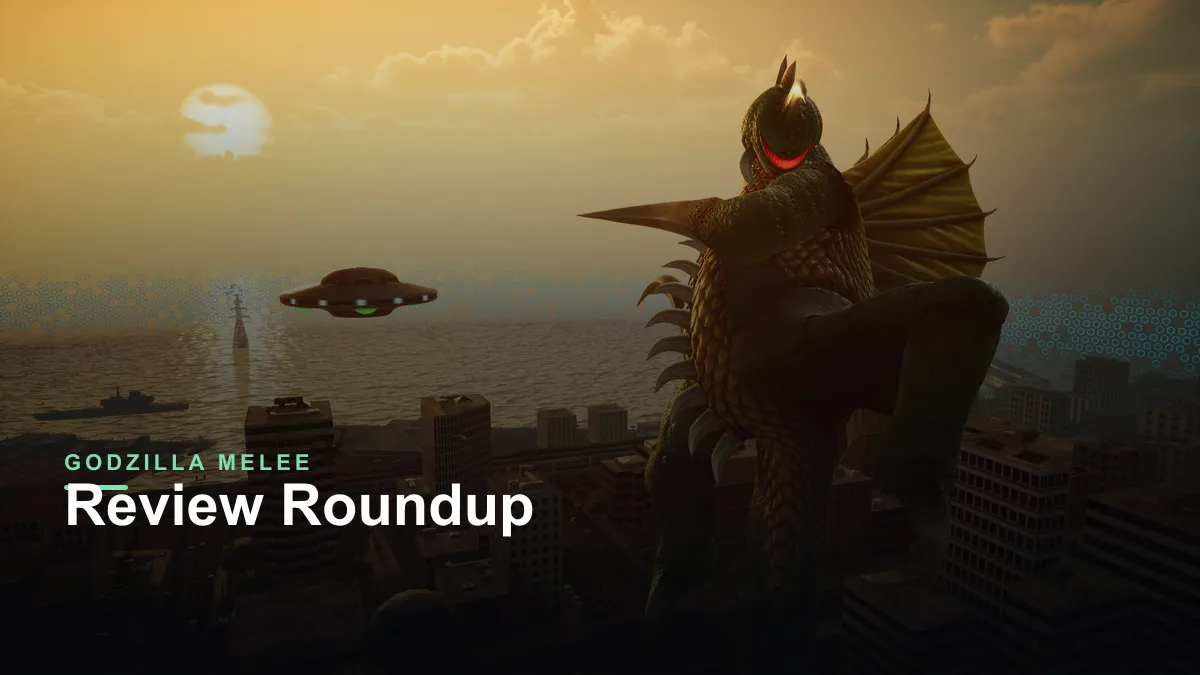
Godzilla: Destroy All Monsters Melee Remastered is worth $29.99 if you want a local multiplayer kaiju brawler. It is a faithful, good-looking update of the 2002 GameCube game, and the new online play fixes the original's biggest limitation. It is not worth full price if you only play alone: the campaigns are short, the AI is limited, and the remaster preserves some of the original's unlock friction.
The critical reception matches that split. IGN scored it 7/10, praising the "deceptively deep" combat and the rubber-suit spectacle while criticizing the lack of a tutorial and the small starting roster. Metacritic's main page showed 75 from six critic reviews at the time of writing, with platform pages in the low 70s. PlayStation Store users are much warmer: 4.87 out of 5 from about 1,100 ratings.
That gap is the whole story. Critics see a preserved 2002 design with rough edges. Fans see a kaiju playground that finally has online multiplayer. Both are right.
The scorecard
| Source | Score | What it emphasizes |
|---|---|---|
| IGN | 7/10 | Deep combat, great presentation, weak onboarding |
| Metacritic | 75 / 100 (6 reviews) | Mixed-to-positive critic consensus |
| PlayStation Store users | 4.87 / 5 (1.1K ratings) | Fan satisfaction, local and online play |
| Our verdict | 7.5/10 | Buy for multiplayer, wait for a sale for solo |
The user score is not a substitute for a review. Store ratings reward fans who already wanted the game, and the PS5 version runs well. The critic score is a better guide if you are new to the series and want a modern fighting game.
What the remaster gets right
The combat has more depth than it looks
The original was never a button-masher, even if it looked like one. Every kaiju has punches, kicks, fierce attacks, directional heavies, grabs, blocks, and an energy attack that can be fired quickly or charged into a beam. You can throw buildings, rocks, and other monsters. You can duck projectiles, punish wake-up attacks, and use the environment as cover.
IGN's review makes the same point: someone who understands the difference between blunt and edge attacks, or who knows when to duck a string, will beat a player who mashes. The remaster keeps that layer intact. The new online mode makes it matter against real people.
The presentation is a genuine upgrade
The game is rebuilt in Unreal Engine 5, and the difference is obvious. The monsters have modern textures and lighting, the cities are more destructible, and the sound design leans into the Toho library. The remaster keeps the rubber-suit tone instead of turning Godzilla into a realistic horror creature. That is the correct choice.
The day and night variants for each of the eight locations add variety without changing the layout. Night stages make beams easier to read; day stages make the arena easier to learn. It is a small feature, but it improves the fighting-game readability.
Online play finally exists
The 2002 release was local-only. The remaster adds online versus, and the early reports are positive: matches are smooth when the connection holds, and the local four-player mode is still there. IGN noted a few disconnects during pre-release testing, but the core online experience works.
That changes the value calculation. A fighting game with no online scene dies quickly. This one has a chance to stay active because the original has a dedicated fan base and the remaster is the only official way to play it online.
The roster and content are complete
Twelve kaiju, eight locations with day and night variants, a campaign for each monster, local and online multiplayer, a gallery, and an unlock system that lets you choose what to buy next. There is no season pass and no missing fighter at launch. The deluxe edition adds cosmetics and one map, not a character.
For $29.99, that is a complete package. The roster guide lists every fighter, and the maps guide explains how the arenas change matchups.
What the remaster gets wrong
There is no tutorial
This is the biggest problem for new players. The game teaches you through loading-screen text and a basic movelist, then throws you into fights. It does not explain blocking, parrying, wake-up attacks, energy management, or the difference between a quick beam and a charged beam.
The original had the same issue, but the remaster had a chance to fix it. It did not. If you are new, read the beginner guide before your first online match, or you will lose to players who already know the system.
The starting roster is small
You begin with four monsters, and the rest are unlocked through the currency system. That is faithful to the original, and it gives the single-player mode a progression hook. It is also annoying in multiplayer, because a friend who just bought the game cannot pick their favorite kaiju until they grind or unlock it.
The unlock system is better than the original because you can choose the order. It is still a gate. If you want to play King Ghidorah on day one, you cannot.
The solo content is thin
The campaigns are functional, not memorable. Each kaiju gets a sequence of fights, some dialogue, and a final boss. The story is not the reason to play. Once you finish the campaigns, the game is a versus fighter, and the AI is not a satisfying long-term opponent.
If you only play single-player, you will run out of meaningful content faster than the $29.99 price suggests. Wait for a sale or play with friends.
Online has some rough edges
IGN reported a few disconnects during pre-release matches, and the online mode does not let you mix CPU opponents with friends. That is a strange limitation for a party game. The local mode is more flexible, but it requires people in the same room.
The netcode is not the focus of this review, and it may improve with patches. At launch, it is good enough for casual matches, not a tournament platform.
Combat: what actually matters
The neutral game is built around range and commitment. Projectiles are slow enough to duck or block. Charged beams hit hard but leave you open. A whiffed grab is punishable. Blocking is strong, but a predictable block gets you thrown.
The character roster is built on those rules. Gigan has strong sword arms but weak projectiles. Anguirus cannot block normally, but his spiked shell punishes attackers who hit his back. Megalon can burrow and attack from below. Godzilla 2000 is faster than his 1990s counterpart. Knowing the matchup matters more than raw damage.
The remaster keeps the original's 99% mechanical fidelity, according to Pipeworks. That is good for veterans and bad for anyone expecting a modern tutorial. The controls guide is the fastest way to learn the inputs.
Multiplayer: the reason to buy
Local play supports up to four players, and the online mode supports up to four on PS5 with PlayStation Plus. Steam lists online PvP, shared/split-screen PvP, and Remote Play Together. The exact crossplay rules depend on the platform, so check the crossplay guide before you buy a copy for a friend on another system.
The best version of this game is a couch full of people who grew up with the original. The second-best version is a regular online group. If neither applies to you, the value drops sharply.
Performance and platforms
The PS5 version runs cleanly in our time with it, with fast loading and no obvious frame-rate problems in the modes we tested. The Xbox Series X|S and PC versions use the same content set. The Switch 2 version exists, but performance varies by mode and we have not benchmarked it; treat platform-specific frame-rate claims as unconfirmed unless the publisher publishes them.
The PC version supports controllers and Steam Cloud. The system requirements are modest by 2026 standards, but the game is Windows-only. There is no last-gen version.
Is the deluxe edition worth it?
The Digital Deluxe Edition adds two skins, the Smash Station map, and a black-and-white filter for about $5 more. It does not add a monster or a campaign. If you play a lot of multiplayer and like the skins, it is a reasonable upgrade. If you are a solo player, skip it. The deluxe edition guide breaks down every platform price.
Who should buy it?
The multiplayer is the reason this remaster exists. If you do not have a regular group, the single-player campaigns are not strong enough to carry the $29.99 price on their own.
Buy it now if: you have friends to play with locally, you want online kaiju fights, or you have nostalgia for the 2002 game. The remaster is the best way to play this design, and the online mode is a real addition.
Wait for a sale if: you only play single-player, you dislike unlock grinding, or you need a modern tutorial. The campaigns are not worth $30 on their own.
Skip it if: you want a story-driven Godzilla game, a realistic fighter, or a deep competitive scene. This is an arcade brawler with a cult following, not a AAA production.
FAQ
How long is the game?
There is no official completion time. The 12 Adventure campaigns, Survival, Destruction, and the unlock grind make up the single-player package. Most players will see the credits on one campaign in a few hours; completing the roster takes much longer.
Does it have online multiplayer?
Yes. PS5 supports up to four online players with PlayStation Plus, and Steam lists online PvP. Local play supports up to four players. Crossplay support varies by platform; the dedicated guide has the details.
Is there a tutorial?
No. The game teaches through loading-screen text and a basic movelist. The beginner guide fills the gap.
Is the deluxe edition required for the full roster?
No. All 12 kaiju are in the standard edition. The deluxe upgrade adds cosmetics and one map.
Is it worth $30?
For multiplayer, yes. For solo play, wait for a sale. The achievements guide shows how much extra content the completion grind adds if you want a longer project.
The verdict
Godzilla: Destroy All Monsters Melee Remastered is a good remaster of a flawed but beloved fighting game. The combat holds up, the presentation is a clear upgrade, and online play makes the package relevant in 2026. The lack of a tutorial and the small starting roster are real barriers, but they are fixable with a guide and a few hours of play.
At $29.99, it is easy to recommend to anyone with a regular multiplayer group. At full price for solo play, it is a harder sell. The price guide has the platform breakdown, and the multiplayer guide explains how to set up a match.
Official source: Steam store page and PlayStation Store.
Sources and verification
- IGN review, published November 2, 2026, scored 7/10.
- Metacritic shows a 75 critic score from six reviews at the time of writing.
- PlayStation Store shows a 4.87/5 user rating from about 1,100 ratings and lists the PS5 feature set.
- Steam confirms the PC content set, controller support, and online categories.
Review scores are snapshots. Metacritic and store ratings change as more reviews and players arrive.
More Godzilla: Destroy All Monsters Melee Remastered Guides
How to play Destoroyah in the remaster: closing space, turning one opening into huge damage, and managing the commitment that makes him high-risk.
How to play Gigan in the remaster: buzzsaw pressure, chest laser zoning, movement mix-ups, and the defense you need to survive his small health pool.
How to play Godzilla 2000 in the remaster: the faster Godzilla's pressure game, spiral breath punishes, Rage timing, and the matchups where speed fails.
How to play Godzilla in the remaster: the neutral game, atomic breath timing, Rage Mode usage, and the matchups that punish careless beam spam.
How to play King Ghidorah in the remaster: using three heads and gravity beams to control space, when to stomp, and how to survive when a brawler gets inside.
How to play Kiryu in the remaster: the freeze tool, maser zoning, heavyweight normals, and the setup routes that make him the highest-ceiling monster.
How to play Mecha-King Ghidorah in the remaster: using cable traps and gravity beams to control space, and why the setup character is harder than King Ghidorah.
How to play the Showa Mechagodzilla in the remaster: armor trades, missile pressure, beam zoning, and the close-range weakness that keeps him honest.